The demand for Islamic finance in Singapore has grown steadily over the past few years. More Muslim consumers are paying attention to where their money goes, how it is invested, and whether the financial decisions they make contribute positively to both their worldly goals and their akhirah.
This growing awareness is an encouraging sign—Alhamdulillah. It means our community is taking financial stewardship seriously. It also means more companies are stepping forward to offer “Islamic-friendly,” “Shariah-compliant,” or “Muslim-friendly” financial planning services.
While this increased availability is good news, it also creates a major challenge: How can the average consumer confidently tell which advisors and companies are genuinely offering Shariah-compliant services, and which are simply using Islamic-sounding language as a marketing tactic?
In this article, we will show you exactly what to look for when evaluating a financial advisor who claims to offer Islamic-friendly or Shariah-compliant financial planning. By the end, you will be able to distinguish between authentic offerings and those that are merely “Islamic-washed.”
Why This Matters
Financial decisions are among the most impactful choices of our lives. Where we place our wealth, the risks we take on, the contracts we sign, and the long-term plans we commit to all bring consequences—not just financially, but spiritually.
Because of this responsibility, you deserve an advisor who:
- understands Islamic financial principles,
- offers products that actually meet Shariah standards, and
- prioritises your risk profile, not their own money personality.
Not all service providers can meet these standards. Some may mean well but lack the expertise. Others may have very limited Shariah-compliant products and try to sell them anyway, even if they do not match your needs. And unfortunately, some simply label generic offerings as “Muslim-friendly” when they are not.
Let’s break down the key signs to look for.
1. Check if They Are Working With a Tied or Non Biased Practicing Advisory Agency
This is one of the most common sources of confusion. In Singapore, financial advisors either:
(A) Work for a Tied Agency
This means they only represent one company. They can only sell products from that single insurer or investment platform.
Why this may be a problem:
If the company has limited or no Shariah-compliant funds, your advisor’s recommendations will also be limited. You may end up with:
- A tiny selection of “Islamic-friendly” funds (sometimes only one or two),
- Portfolios that do not match your risk profile, or
- Non-Shariah-compliant products disguised with Islamic-sounding explanations.
(B) Work for a Non Biased Practicing Advisory (IFA) firm
These advisors are not tied to one provider. They can curate products from multiple companies and build a more comprehensive Shariah-compliant portfolio across different risk levels.
Why this matters:
- Authentic Islamic financial planning requires:
- screening the products,
- ensuring the underlying holdings are permissible,
- and rebalancing them over time to maintain compliance.
Non biased practicing advisory firms are generally better equipped to do this because they have:
- access to more product providers,
- specialist research teams,
- and dedicated support for Islamic offerings.
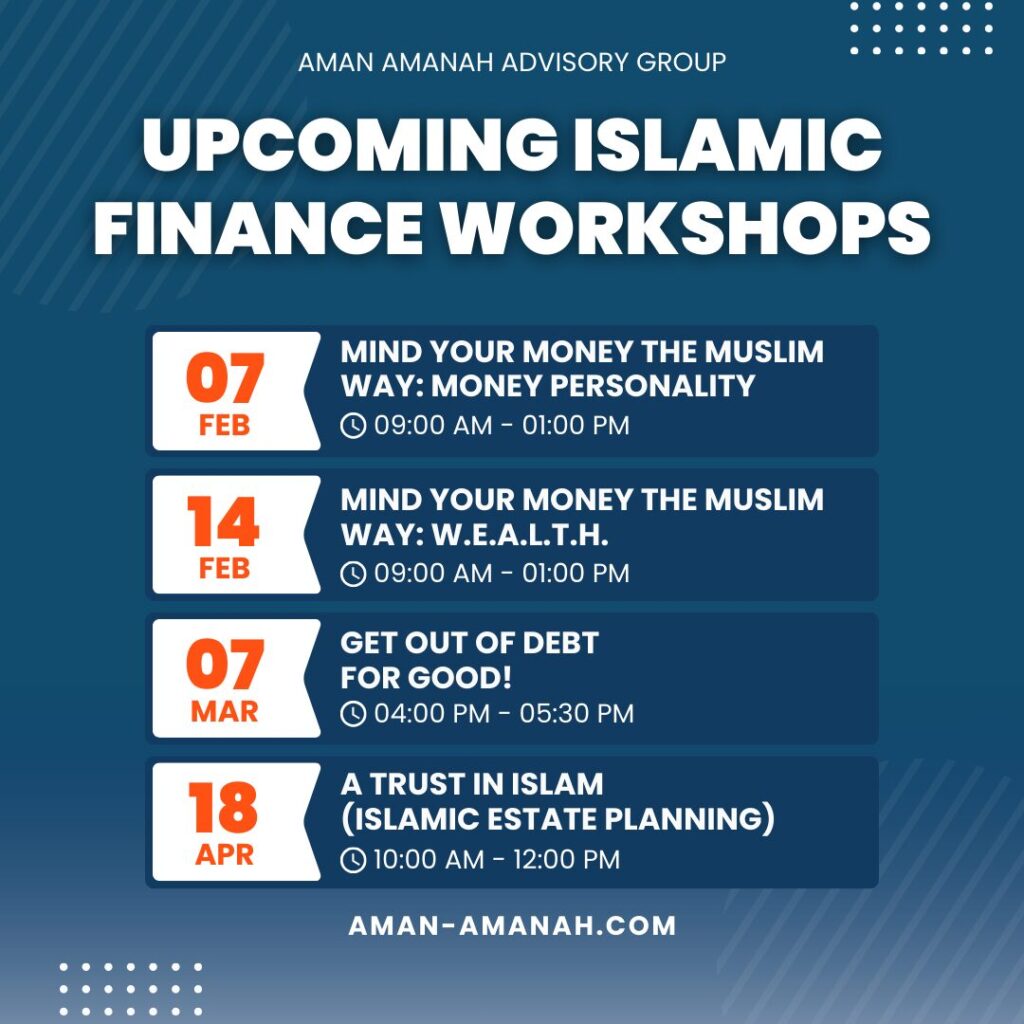
If you’re unsure how tied and independent agencies differ, we discuss this in detail in our Islamic Finance classes—where you can ask questions freely and get real-life examples.
2. Does the Company Consult a Shariah Advisor that is Qualified and a Scholar?
This is one of the most important checks. A company cannot simply declare itself “Islamic-friendly.” It must have proper oversight from qualified Shariah advisor or recognised committees.
Here’s what a real Shariah-compliant provider will have:
✔ A Shariah Advisory Board
This board consists of scholars and experts who specialise in:
- Islamic jurisprudence (fiqh),
- Islamic commercial law,
- and contemporary Islamic finance.
✔ Formal screening and approval processes
Every product offered must go through:
- Initial Shariah screening
- Ongoing monitoring of fund holdings
- Purification processes (if applicable)
- Annual audits to ensure continued compliance
✔ Transparent documentation
Authentic Islamic financial providers will publish or provide:
- screening criteria,
- fatwa references,
- compliance reports,
- and details of the scholars involved.
If an advisor cannot tell you who their Shariah experts are—or the company has none—you should be very cautious.
3. Do They Offer Portfolios That Match Your Risk Profile?
Even Islamic-friendly services carry investment risks. This is normal, and Shariah does not forbid risk—it forbids unjustified or speculative risk. However, the portfolio MUST match your personal risk profile. In financial planning, risk profiles typically fall into five categories:
- Conservative
- Moderately Conservative
- Moderate
- Moderately High
- High
Each profile requires a different mix of Shariah-compliant funds.
❗ Warning Sign:
Some advisors only have 1–2 Shariah-friendly funds, which means they can only build portfolios for 1 or 2 risk levels. This leads to problems such as: high-risk clients being given conservative Islamic funds (low returns), or risk-averse clients being forced into riskier funds (uncomfortable volatility).
A real Islamic financial advisor will:
- understand your stage of life,
- identify your affordability,
- ask many questions (not just give answers),
- and ensure your portfolio truly reflects your risk appetite—not theirs.
A genuine advisor separates their personal money personality from yours.
If an advisor pushes their own preferences—high risk or low risk—onto you, it’s a red flag.
4. Do They Provide Professional Rebalancing and Ongoing Shariah Monitoring?

Islamic portfolios are not “set and forget.” Even if a product is compliant today, it may not remain so. Stocks can change business activities, debt ratios, ownership structures, and income sources over time. Without monitoring, your portfolio can quietly drift out of compliance.
This is why reputable Islamic financial providers:
✔ Have dedicated analysts
✔ Conduct periodic reviews
✔ Replace non-compliant assets
✔ Rebalance portfolios to match your risk profile
✔ Work with Shariah experts for continuous oversight
Aman Amanah Advisory is an example of a provider that offers:
- a wide selection of Islamic-compliant funds,
- a team of subject matter experts,
- active monitoring,
- and Shariah-compliant portfolio rebalancing across all five risk profiles.
Many smaller or tied agencies simply do not have the resources to do this. Without proper oversight, your portfolio may drift into:
- riba-based investments,
- non-compliant sectors,
- speculative holdings, or
- unbalanced risk exposure.
5. Do They Work With or Are They Supported by Recognised Islamic Finance Bodies (e.g., FAIWA)?
Authenticity requires more than good intentions—it requires accountability. Look for advisors or companies that receive support from recognised Islamic finance organisations such as:
FAIWA – Financial Alliance Islamic Wealth Advisory. A body that ensures:
- Shariah compliance is upheld across offerings,
- ongoing product screening is done professionally,
- advisors receive proper Islamic finance training,
- portfolios are rebalanced with Islamic principles in mind,
- and the organisation stays updated with new Shariah-compliant products.
If your advisor works with a company that partners with such organisations, it is a strong sign of legitimacy.
6. Do They Listen Before They Recommend Anything?
An advisor’s ethics are as important as their technical skills. A real Islamic financial advisor will:
- ask questions first,
- understand your needs deeply,
- clarify your life stage and goals,
- assess your affordability and comfort level,
- identify your risk appetite accurately,
- and avoid recommending anything prematurely.
Islamic financial planning is based on reducing harm (darar) and ensuring fairness (adl).
If an advisor does not listen to you at the start, how can they give advice that is suitable for you?
A rushed or pushy advisor—Islamic or not—is a red flag.
Conclusion: Evaluate, Compare, and Make an Informed Decision
Choosing a financial advisor is not just about choosing someone who fits your lifestyle—it’s choosing someone who helps you honour your deen in your financial journey. Take the time to:
- evaluate your advisor’s company,
- understand their Shariah governance,
- compare their offerings with other providers,
- assess how they understand your risk profile, and
- make sure their Islamic-friendly services are real, not symbolic.
Your financial choices have consequences for the hereafter. So choose wisely.
If you want to learn more about Islamic Finance, understand how real Shariah-compliant offerings work, or ask your questions directly—join one of our upcoming classes.
It’s a safe space to clarify doubts and empower yourself with knowledge that will benefit you now and for the future.